 Onsen Hopper
Higaeri onsen: how day use works
Day use means bathing without staying the night; inns and hotels that open their baths to day-trippers do it at a fixed price. Of the 1,397 listed baths that state a day-use price, the median is ¥750 and 32 are free, checked 2026-10-30.
Written by Max, checked 2026-10-21
- 1,397 of 1,475 listed onsen state a day-use price
- ¥750 median day-use price across the 1,397 that state one
- 32 listed onsen charge nothing for day use
- 292 listed onsen have a private bath
Our database, checked 2026-10-30.
What is higaeri onsen?
Higaeri onsen is the Japanese term, which JNTO glosses as a day trip hot spring facility. Some onsen operate solely as hot springs with paid entry for day use, while many ryokan inns and hotels offer their onsen to overnight guests.
JNTO says those inn and hotel baths are usually open to day-trippers too, always at a fixed price. In onsen towns such as Kusatsu, many facilities specialise in day-use plans or drop-in bathing.
Onsen Hopper lists 1,475 baths that take day visitors; 1,397 state a price, the median is ¥750, 32 are free and 292 have a private bath, checked 2026-10-30. Browse every day-use onsen or the map. What makes water an onsen in the first place is on what is an onsen.
How much does day use cost?
Of the 1,397 listed baths that state a day-use price, the median is ¥750, and 32 are free, checked 2026-10-30. A municipal bathing tax, nyutozei, may also be charged on bathing at an onsen facility; it pays for environmental hygiene and fire services facilities and for tourism.
Treatment differs by municipality: Matsue, for example, exempts day-trip bathers from the tax. Private kashikiri baths almost always cost extra and must be reserved in advance or at the front desk, where you receive a key.
Cheap onsen lists baths at ¥500 or less; private onsen lists the ones with a private bath.
When can I go?
Hours are the catch: at Gero Onsen, for instance, some hotels and ryokan open their baths to the public at certain times of the day. One ryokan in Tsuchiyu Onsen takes day bathers from 14:00 to 17:30, with last reception at 17:00.
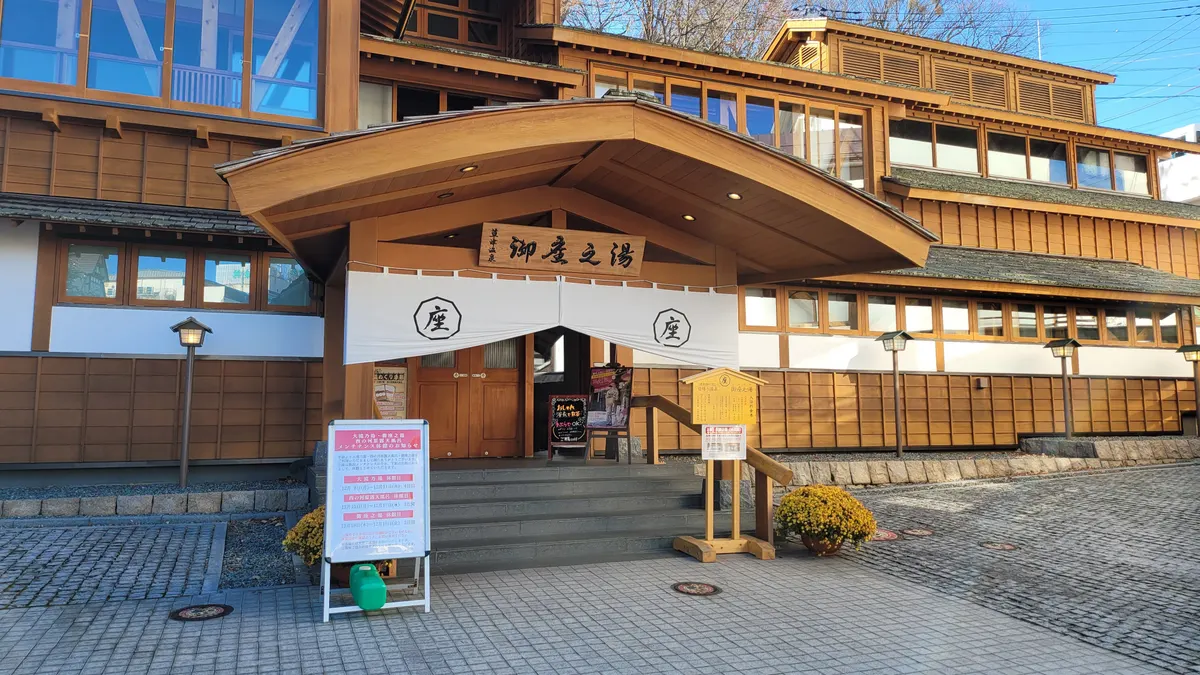
Kusatsu's Gozanoyu, a town bathhouse, opens 07:00 to 21:00 from April to November, with last entry at 20:30. The Tsuchiyu ryokan also warns that it may refuse day use on closed days and at busy times. Arrive well before the last entry time and check the hours on the listing before you travel.
Do I need to book?
It depends on the bath: the Tsuchiyu ryokan asks day visitors to contact it beforehand. Private kashikiri baths almost always need a reservation, in advance or at the front desk.
The same ryokan's private open-air bath requires a reservation. At Arima Onsen, many ryokan offer their baths to non-staying visitors during the day. Kinosaki goes further: a day pass gives unlimited entry to the town's bathhouses.
Town pages: Arima, Kusatsu, Kinosaki and Gero.
What do I bring?
JNTO's onsen guide says a small towel for washing or modesty is usually provided. Bring a larger towel to dry off with, or check the official site linked on the listing for towel rental.
Most places have lockers for clothing and valuables, JNTO says. Pack a bag for wet things and leave valuables in a locker. The bathing rules are the same as at any onsen: onsen etiquette.
JNTO's general advice for Japan is that many places, especially in rural areas, may still only accept cash, even hotels. Carry enough cash for the entry fee in case the bath does not take cards.
Questions
Is a towel included in the day-use price?
JNTO's onsen guide says a small towel is usually provided, but not whether a day-use price includes one. Check the official site linked on the listing, and bring your own to be safe.
What time do day-use baths open?
Kusatsu's Gozanoyu opens 07:00 to 21:00 from April to November, with last entry at 20:30. One Tsuchiyu ryokan has a narrower window: day bathers from 14:00 to 17:30, with last reception at 17:00. At Gero Onsen some hotels and ryokan open their baths to the public at certain times of the day.
Do I have to book a day-use onsen?
For a shared bath it depends on the bath: the Tsuchiyu ryokan asks day visitors to contact it beforehand. Its private open-air bath requires a reservation. Private kashikiri baths almost always need to be reserved in advance or at the front desk.
What is the bathing tax?
Nyutozei is a municipal tax on bathing at an onsen facility, earmarked for environmental hygiene, fire services and tourism. Some municipalities exempt day visitors: Matsue does.
Can I pay by card?
JNTO's general advice for Japan is that many places, especially in rural areas, may still only accept cash, even hotels. Carry enough cash for the entry fee and check the official site linked on the listing.
Is there somewhere to rest after the bath?
At sento, JNTO notes, drinks are sold from vending machines outside the bath, and there are often seats or tatami space to stretch out on. The Tokyo Sento Association says some sento have a lobby where you can sit with a drink.
Sources
- Japan National Tourism Organization, Onsen Hot Springs - On Tattoos and Etiquette, checked 2026-10-21
- Japan National Tourism Organization, Fuji Yurari Onsen, checked 2026-10-21
- Japan National Tourism Organization, How to Best Enjoy Japan’s Onsen, checked 2026-10-21
- Kyotanabe City, 入湯税とは, checked 2026-10-21
- Matsue City, 入湯税, checked 2026-10-21
- Japan National Tourism Organization, Gero Onsen, checked 2026-10-21
- New Ogiya (Tsuchiyu Onsen), 日帰り入浴 | 土湯温泉 源泉湯庵 ニュー扇屋 【公式】, checked 2026-10-21
- Kusatsu Tourism Public Corporation, 草津温泉 御座之湯【草津三湯】, checked 2026-10-21
- Japan National Tourism Organization, Arima Onsen, checked 2026-10-21
- Japan National Tourism Organization, Let's Go to an Onsen and Enjoy It Like Locals Do, checked 2026-10-21
- Japan National Tourism Organization, Cashless Payments in Japan | Travel Japan (Japan National Tourism Organization), checked 2026-10-21
- Japan National Tourism Organization, Enjoy Bath Culture in Japan | Blog | Travel Japan (Japan National Tourism Organization), checked 2026-10-21
- Tokyo Sento Association, 銭湯の入り方 | 【公式】東京銭湯/東京都浴場組合, checked 2026-10-21
Made by Max for Onsen Hopper · Where the facts come from